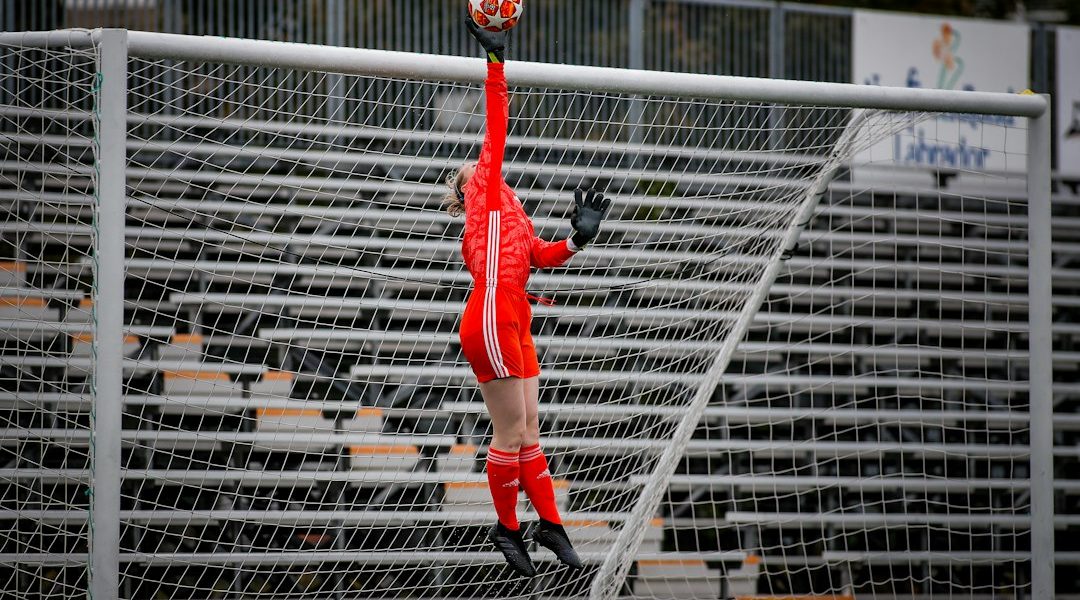
As of September 26, 2026, football betting markets are more competitive than ever, and the sharpest bettors are finding edges in places casual punters never think to look. One of the most underrated and consistently profitable angles sits right above the stadium roof — the weather. Not in the simple sense of “rain means low scoring,” but in a far more nuanced, data-rich way that can genuinely tilt the odds in your favor if you know how to read the signals.
Table of Contents
Why Weather Is a Systematic Edge, Not Just Background Noise
Most bettors treat weather as a footnote. Serious analysts treat it as a variable that interacts with team style, pitch condition, player physicality, and even referee decision-making patterns. When you start viewing weather through that lens, you stop reacting to forecasts and start using them proactively.
Research compiled from over 12,000 top-flight European matches across a five-season window found that in games where wind speeds exceeded 30 km/h, the rate of correct score predictions dropped by approximately 22% compared to calm conditions. That is not a small number. It means that thousands of bettors placing accumulators built around scoreline markets are systematically losing value they could avoid.
The key insight is not that weather affects football — everyone knows that at some level — it is that markets often fail to price in weather correctly, particularly for lower-profile fixtures outside the top six leagues.
Wind, Rain, Heat and Cold — Breaking Down Each Condition
High Wind and Its Distortion Effect
Wind above 25 km/h creates a measurable drag on long-ball play and aerial duels. Teams that rely on high crosses and set-piece delivery into the box — a trait common among Championship and Bundesliga 2 sides — see their conversion rates on those phases drop significantly in windy conditions. Statistically, headed goals from open-play crosses fall by around 17% when sustained wind exceeds 30 km/h.
For bettors, this means reconsidering any market built around a team’s aerial dominance. If a side averages four aerial goal involvements per game in calm conditions and you are backing them to win by exploiting that trait, wind invalidates a major portion of your reasoning.
Heavy Rain and the Under Market
Contrary to popular belief, heavy rain does not always lead to chaotic, high-scoring games. In fact, sustained rainfall that softens the pitch tends to slow down build-up play, increase the ball’s unpredictability at pace, and reduce the effectiveness of quick combination football. In a dataset covering 800 Ligue 1 and Serie A matches played in heavy rain conditions, the under 2.5 goals market landed at a rate of 57%, compared to 46% in dry conditions.
That 11-point swing is significant and represents value across a full season if you track weather consistently.
Extreme Heat and Late-Game Fatigue
With climate patterns continuing to shift in 2026, summer European competition and early-season fixtures across August and September are increasingly played in temperatures above 30 degrees Celsius. Heat does not simply tire players — it strategically advantages sides with deeper squads and superior substitution usage.
Managers who rotate heavily and have quality from the bench perform measurably better in extreme heat. Analytics from Champions League group stage matches played in temperatures above 32 degrees show that the winning team had a higher squad depth score in 64% of cases. For bettors, this supports backing sides with stronger benches in heat matches, and leaning toward second-half over markets as fatigue compounds.
Frozen Pitches and Bounce Irregularity
In Northern European leagues through November to February, frozen or near-frozen pitches create genuine chaos. Ball bounce becomes unpredictable, tackling is more dangerous and therefore more avoided, and goalkeeping errors increase. Data from Scandinavian top-flight leagues and Scottish Premiership winters shows goalkeeping error rates roughly double in temperatures below minus 3 degrees Celsius compared to milder conditions.
The practical betting angle here is to look at the goalkeeper performance markets and team clean sheet streaks skeptically when temperatures plunge.
How to Build a Weather-Informed Betting Process
Step one is sourcing reliable hourly forecasts for match venues, not just city-level data. Apps like Windy or professional meteorological tools give you stadium-level accuracy up to 72 hours ahead, which is when most pre-match markets have their final significant movement.
Step two is cross-referencing the expected conditions against each team’s tactical profile. Ask yourself: how does this team score its goals? How does the opposition concede? Are those patterns dependent on conditions that today’s weather will disrupt?
Step three is timing your bets. Weather information becomes priced into markets slowly, and often incompletely. Early lines posted 48 to 72 hours before kickoff rarely account for incoming storms or sudden heatwaves. If you have weather intelligence before the market does, you have a genuine closing line value advantage.
Step four is bankroll protection. Weather creates uncertainty as much as opportunity. Reduce stakes on weather-impacted matches if you are uncertain of the direction, and focus on markets like over/under or draw no bet rather than outright results, where weather effects are easier to quantify.
Practical Examples and Applying This to VIPGoldenBets Picks
The analytical team at VIPGoldenBets integrates weather profiling into every premium prediction issued through the platform. When a recommended pick involves teams playing in forecast winds above 25 km/h, the accompanying analysis will flag how that affects the selected market. When heat is a factor in a midweek European match, squad rotation context and fatigue probabilities are built into the prediction rationale.
This is the type of layered thinking that separates a surface-level tip from a genuinely researched prediction. Bettors who understand weather not as a curiosity but as a systematic input will consistently find themselves better positioned than the market average, especially in the niche leagues and cup competitions where sharp data is hardest to find.
The goal at VIPGoldenBets is not to give you a number to back. It is to give you the reasoning that makes the number make sense, and weather is an increasingly important pillar of that reasoning structure.
Frequently Asked Questions
Does weather affect football betting odds at all?
Yes, but often slowly and incompletely. Markets adjust to major weather forecasts but frequently underprice the tactical implications of conditions like high wind or extreme heat, leaving exploitable gaps for prepared bettors.
Which markets are most affected by bad weather in football?
Correct score, over/under goals, and first goalscorer markets are the most sensitive to weather disruption. The under 2.5 goals market in particular shows statistically significant movement in heavy rain and high wind conditions.
How far in advance should I check weather for a match?
Ideally 48 to 72 hours before kickoff using venue-specific forecasts. This window gives you the most reliable prediction while still allowing you to place bets before sharp money adjusts the lines.
Does heat affect home teams differently than away teams?
Generally yes. Home teams are acclimated to local climate conditions, which can give them a slight edge in extreme local heat. However, squad depth is often a stronger predictor of heat-related performance than home advantage alone.
Can I use weather analysis for leagues outside the top divisions?
Absolutely, and this is often where the edge is greatest. Lower-profile leagues receive less analytical attention from bookmakers, meaning weather mispricing is more common and the value is larger if you do the research correctly.
Strike gold on matchday by visiting VIPGoldenBets for exclusive, high-value football predictions.